
I love books. I’ve read hundreds about retail, technology, and marketing, and a handful of them changed how I think and what I did with my career. So I get asked for recommendations a lot, and I don’t have many.
The reason is timing. The publishing cycle is too slow for most of what matters in commerce right now, and the economics of publishing discourage the people I’d most want to hear from. The operators who actually know how this business works are too busy running it to write a book about it. If you want current thinking, the podcast and my LinkedIn feed are a better bet.
Still, a few categories of books have held up for years, and for those, a book is still the best format there is. That’s this list.
Disclosure: the links below are Amazon affiliate links, so I get a small fee if you buy through one. If you’d rather buy from your local bookstore, please do.
Psychology and Behavioral Economics
Technology changes every year. The way people decide what to buy doesn’t. These books explain why shoppers trust one review and ignore another, why what people say they want and what they actually buy are two different things, and why a price feels fair or unfair before anyone does the math. I’ve used these ideas every day of my career, and I wish I’d understood them much earlier than I did.
Start with the first three. The rest are for when you want to go deeper.
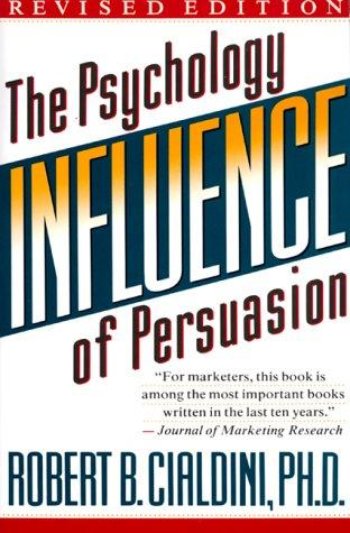
Influence, Robert Cialdini
The book on persuasion. Cialdini lays out six principles (reciprocity, commitment and consistency, social proof, authority, liking, and scarcity; the 2021 edition adds a seventh, unity) and shows how marketers, fundraisers, salespeople, and con artists use every one of them. He wrote it as a “know your enemy” manual for consumers, and it became the go-to guide for everyone on the other side of the counter. Every commerce experience you’ve ever used runs on these principles, and social proof in particular has become the one that decides whether a product sells online. If you read one book on this list, read this one.
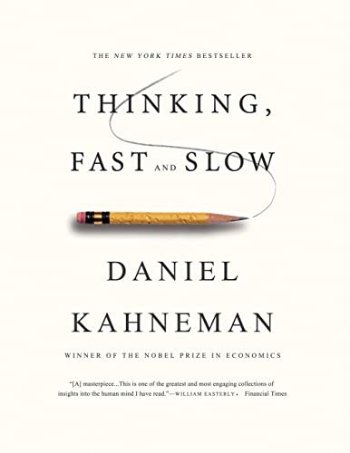
Thinking, Fast and Slow, Daniel Kahneman
Kahneman’s account of the two systems that run your brain: the fast, automatic one that makes most of your decisions, and the slow, deliberate one that takes credit for them. It’s where anchoring, overconfidence, and loss aversion get their fullest treatment, from the researcher who defined them. It is not a light read. It is the one that changed how I think about my own judgment, not just my customers’.
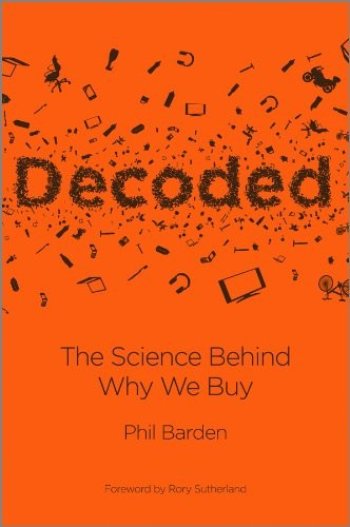
Decoded, Phil Barden
The most practical book here for a working marketer. Barden takes the research in the two books above and shows what it looks like in an ad, a package, a price, and a shelf. His explanation of how shoppers weigh reward against the pain of paying is the clearest I’ve found, and his case studies are the kind you can take into a meeting on Monday.
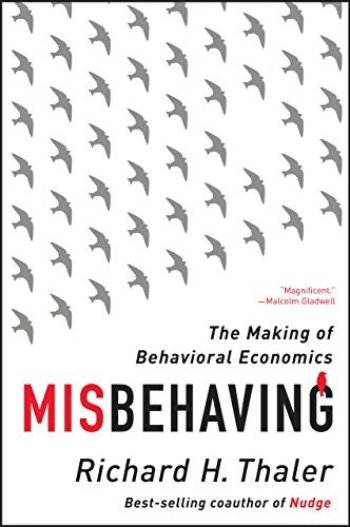
Misbehaving, Richard Thaler
The origin story of behavioral economics, told by the economist who spent a career annoying his colleagues by pointing out that real people don’t behave like the models. Mental accounting, loss aversion, the endowment effect, all of it, with the experiments and the arguments that produced them. Funnier than a book by a Nobel laureate has any right to be. (Kahneman and Thaler are the two Nobel winners on this list.)
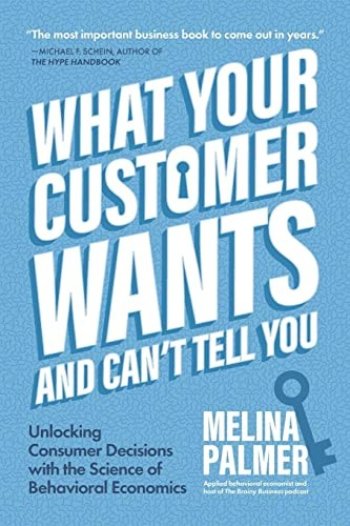
What Your Customer Wants and Can’t Tell You, Melina Palmer
If Decoded is the marketer’s version, this is the operator’s version. Palmer takes one principle per chapter, loss aversion, anchoring, the pain of paying, and shows how to apply it to pricing, product design, and customer experience without being manipulative. The title is the whole thesis, and it’s one I repeat constantly: what customers tell you in a survey and what they do at checkout are two different data sets, and only one of them is real.
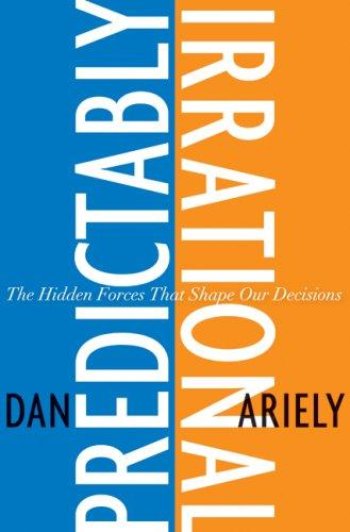
Predictably Irrational, Dan Ariely
Ariely’s experiments on why we overvalue “free,” why we can’t judge a price without something to compare it to, and why context beats logic almost every time. The most entertaining book on the list and the easiest to hand to someone who has never read any of this.
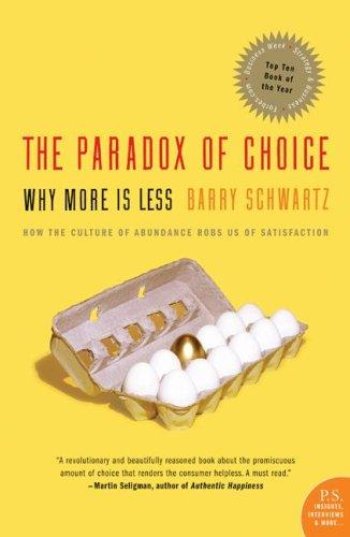
The Paradox of Choice, Barry Schwartz
The argument that more options make people less happy and less likely to buy, built on the famous jam study. Here’s my caveat: later researchers tried to replicate the choice-overload effect and mostly couldn’t, and the real answer on assortment turns out to be more complicated than “less is more.” Read it anyway. The framing of satisficers versus maximizers is useful, and the question it asks is the right one, even if the first answer was too neat.

Contagious, Jonah Berger
Why some ideas and products get talked about and most don’t. Berger’s six principles (social currency, triggers, emotion, public, practical value, stories) are a useful checklist, and the examples are good. Worth reading now that creator-driven discovery has made word of mouth the front door of commerce rather than a nice-to-have.
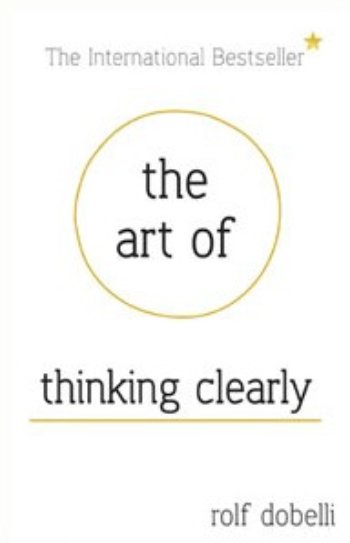
The Art of Thinking Clearly, Rolf Dobelli
The easiest read on the list: 99 short chapters, one cognitive bias each, with an everyday example. Survivorship bias, the sunk cost fallacy, confirmation bias. It’s a reference book you can read in an afternoon, and it’s the one I’d hand to someone who wants the vocabulary without the research.
Retail Biographies
I’m addicted to this genre. I could recommend dozens of retail and brand biographies, and I’ve probably tried to. These four are the ones I keep coming back to. They’re good stories, which matters, but the real value is watching a founder run into a problem nobody had solved before and work out the answer from scratch. Most of what we now treat as standard retail practice started as one of those answers.
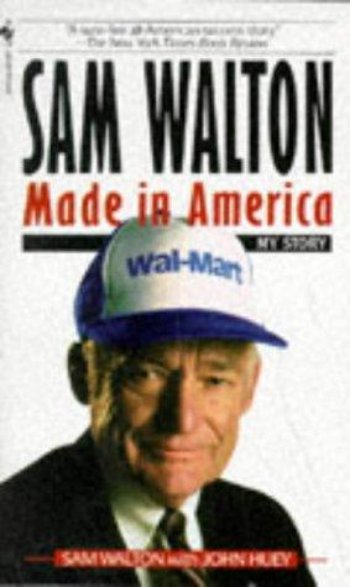
Sam Walton: Made in America, Sam Walton with John Huey
Mr. Sam invented discount retailing and a large share of modern retail’s best practices along the way. It’s still relevant today. The smartest retail leaders I know reread it every year, and it’s required reading before you visit Bentonville.
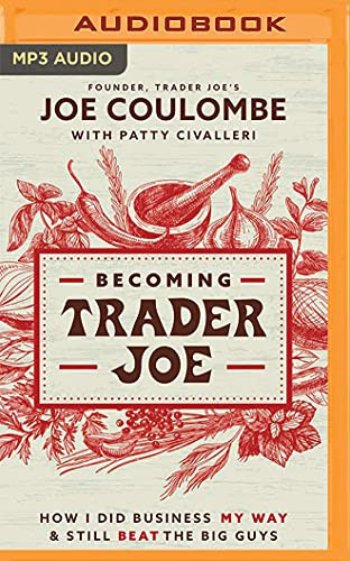
Becoming Trader Joe, Joe Coulombe
I love this book. Coulombe came up alongside the other retail titans of his era, Sol Price and Sam Walton among them, and while he’s less famous, he was just as influential. The pleasure of the book is watching him reason his way, with common sense and retail instinct, into practices that are now so familiar we forget someone had to invent them. If you care about owned brands, this is where the modern playbook starts.
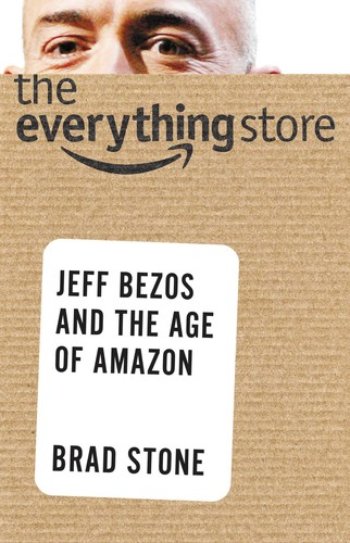
The Everything Store, Brad Stone
The biggest disruption to commerce in our lifetime is digital, and Jeff Bezos and the Amazon team were the first to figure it out and came close to perfecting it. Stone’s is the definitive version of the story.
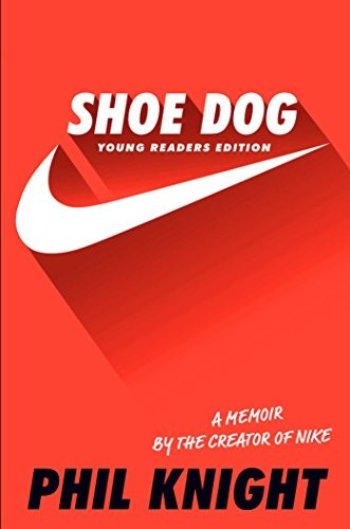
Shoe Dog, Phil Knight
The best-written book on this list, and a riveting account of building one of the most durable brands of the last 50 years. Read it for the story. Then notice how much of it is about cash flow, wholesale partners, and the fight to own your own customer, which is the fight every brand is still having.
Customer Centricity
Most retailers say they’re customer-centric. Very few can show you the math. These two books are the practical end of the idea: one for measuring it, one for delivering it.
The Customer-Base Audit, Peter Fader, Bruce Hardie, and Michael Ross
I’m a huge fan of customer-centric metrics and incrementality, and Peter Fader is the OG of customer lifetime value. This is a short, practical manual for getting started with customer cohort analysis, which is the first step toward running a business on how customers actually behave rather than on averages. Give it to your finance team.
Unreasonable Hospitality, Will Guidara
Commerce isn’t just about acquiring customers. It’s about keeping them and giving them a reason to come back. Guidara ran the restaurant that was named the best in the world, and the book is about how far you can go past what a customer expects. If you’re setting the bar for customer experience, start here.